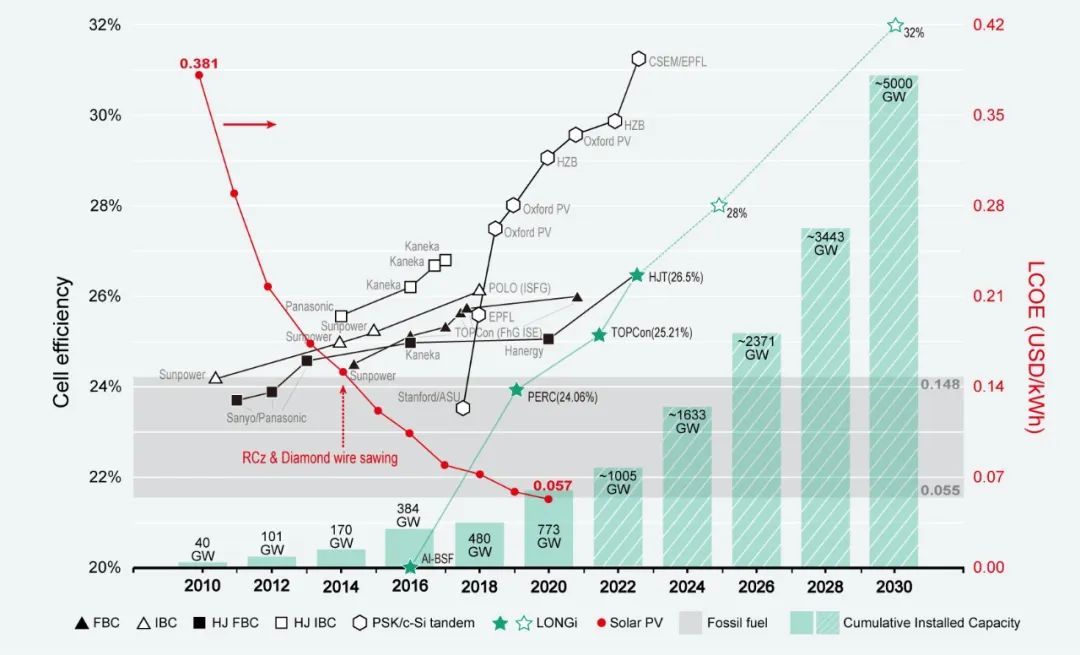
Fig. 1. The development of solar PV in the past decade and future anticipation.
With the application of advanced laboratory technologies and new technical breakthroughs, the conversion efficiency of commercial c-Si solar cells will continue to improve, according to the research article.
Over the next decade, the c-Si solar cell will remain the mainstream technical route for the photovoltaic industry, but to achieve a cell conversion efficiency higher than 28%, it is still necessary to deeply understand the factors that affect the photovoltaic conversion efficiency of cells and explore ways to effectively control these factors.?
If the lifespan and large area efficiency loss of perovskite solar cells can be effectively improved in the next few years, the perovskite/?c-Si?tandem?solar cells are expected to become the mainstream high-efficiency solar cells in the future.
Therefore, the photovoltaic industry should return to the main track of conversion efficiency improvement, strengthen the R&D investment of new cell materials and technologies, lay the foundation for scientific and technological innovation, commit to reducing costs and increasing benefits, improve the competitiveness of the photovoltaic industry, and promote the large-scale application of clean energy. This is the present as well as the future top priority for the development of China's photovoltaic industry.
Expanding photovoltaic application scenarios
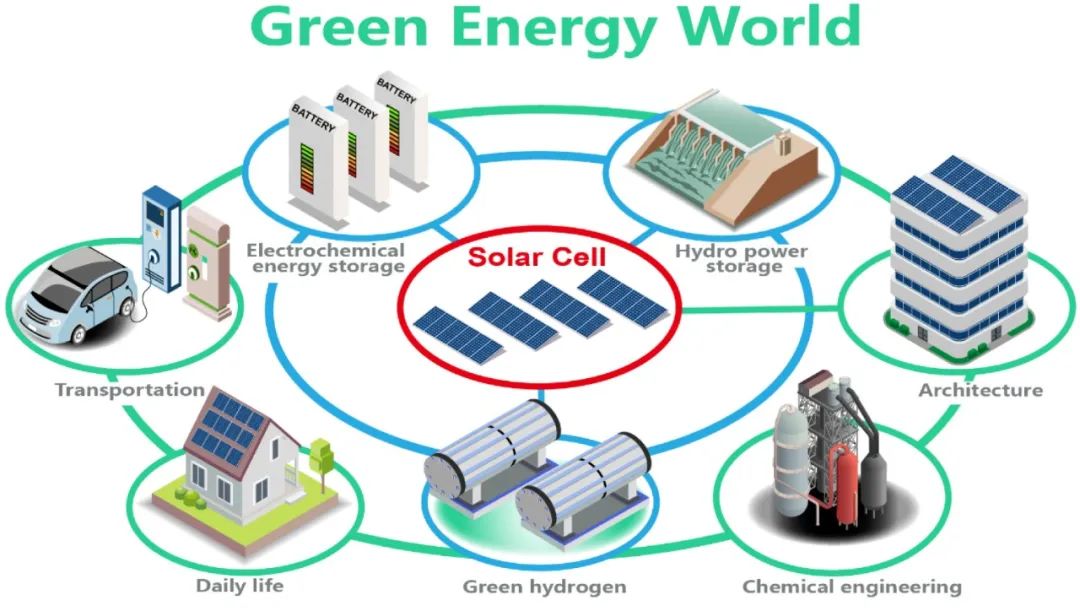
The proportion of photovoltaic energy in the entire energy system is surging. However, this increasing photovoltaic proportion in the power grid is challenged by the regional intermittence of photovoltaic energy. To overcome this challenge, multi-energy complementary systems with photovoltaic and other renewable energies (hydropower, wind power etc.) are being adopted. In addition, extended photovoltaic systems composed of photovoltaic and various energy storage units, including physical (hydropower), electrochemical (battery) and chemical (hydrogen) approaches, are emerging.
Fig. 2. Future integrated energy system for a green energy world.
With the continuous cost reduction of photovoltaic energy, the PV-EC route is expected to become the cheapest method for green hydrogen production. On the other hand, the huge demand for green hydrogen in the future will bring great opportunities for the development of the photovoltaic industry and further reduce the cost of photovoltaic energy.
Li Zhenguo believes that in the long term, the "photovoltaic+" system, in which green hydrogen is deeply involved, is the key to deep decarbonization and sustainable development of the whole society.
Transformation from resource properties to manufacturing properties
The rise of the photovoltaic industry will assist in altering the energy pattern worldwide, a trend that cannot be ignored on a global scale.
As the distribution of sunlight across the world is more balanced than traditional fossil fuels, the resources are infinite.
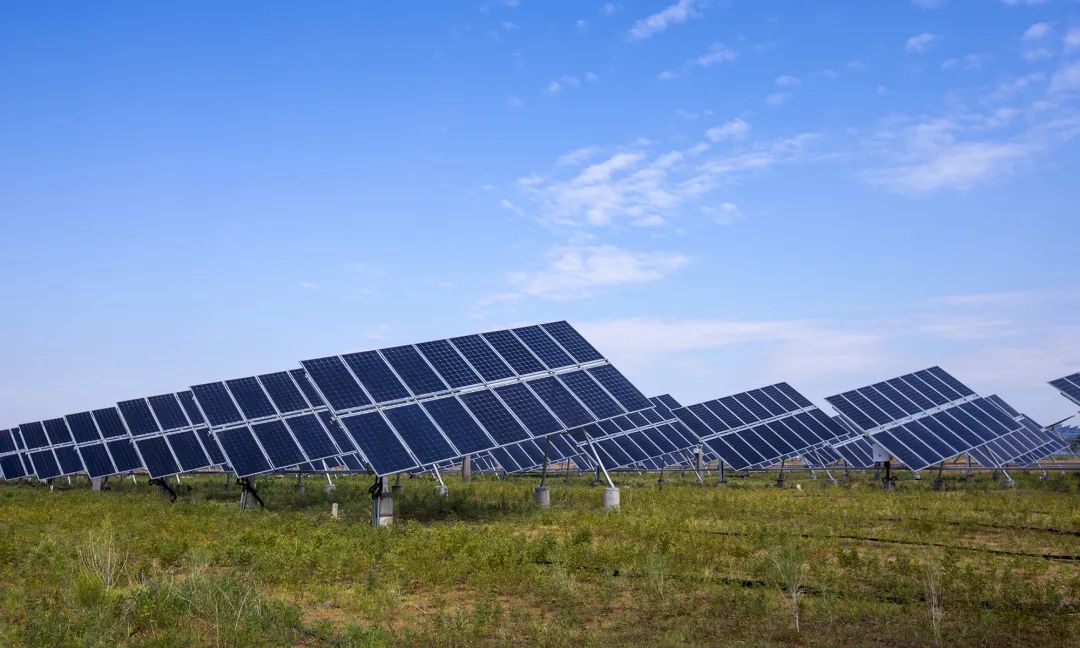
LONGi’s “PV+ Desertification Governance” pilot project in China’s Kubuqi desert
If 1% of the global desert area can be used for photovoltaic power generation, it could meet the energy needs of all human beings, and if a quarter of the Taklimakan Desert were covered by photovoltaic modules, the amount of electricity produced would be equivalent to the amount consumed in China today.
Li Zhenguo believes that as the "photovoltaic+" system matures, the challenges posed by the intermittent and discontinuous nature of photovoltaic energy in a particular region will be gradually overcome, and the global energy industry will transition from resource properties to manufacturing properties.
Read the Paper
?About LONGi
Founded in 2000, LONGi is committed to being the world’s leading solar technology company, focusing on customer-driven value creation for full scenario energy transformation.
 Global English